There is no such thing as channel stability except on a temporary basis.
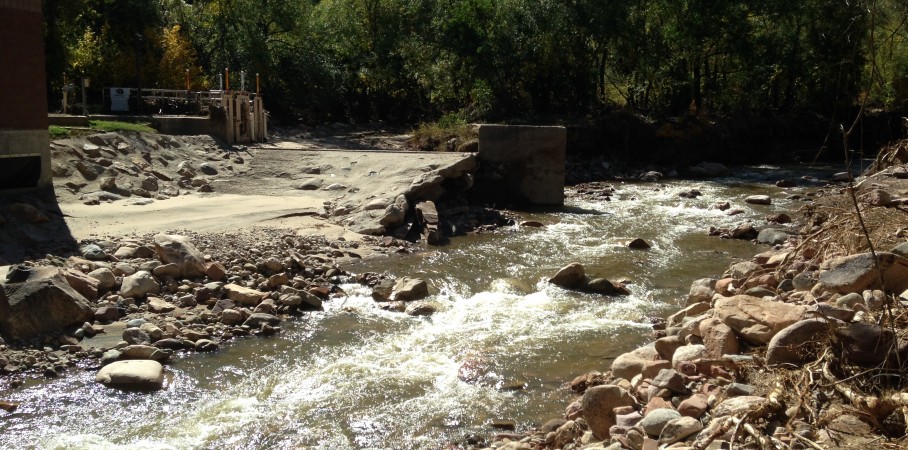
This is Left Hand Creek diversion structure after the 2013 flood on the Colorado Front Range north of Boulder, Colorado. What we learned, and seem to have forgotten or blocked from memory, is the river finds a way. Rivers move. Mountain rivers move quickly because of high energy flow and sediment being transported. This is upstream from the mouth of the canyon where the river avulsed (escaped the banks of the normal river) on the alluvial fan.
Alluvial Fan https://en.wikipedia.org/wiki/Alluvial_fan
The solution is move the point of the diversion upstream to reduce the amount of energy, head, stored in one location. Ditches need head to keep water flowing to the reservoir. In channel concrete structures like this always fail. This structure was still in place after the project was completed. The low flow channel in the photo was replaced with a design to fail structure and culvert. The next flood will look like this again.
Or we can move diversion points when given the opportunity. Its easy to think this type of flood will not happen again. We do not know when the next fire or flood will happen. Or microburst of water focused on one watershed.
Resilience planning starts before the fire and flood.
Resilience conversations start before the fire and flood (repeated for emphasis). These are difficult conversations. We need to have them before the next fire and flood. We need to talk with our communities about the changing flood risk.
We need to have difficult conversations with people. Human to human.
Photo Credit to the Watershed Center https://watershed.center/ (formerly Lefthand Watershed Oversight Group)